
Should You Bundle Car and Renters Insurance in Texas?
If you rent an apartment, condo, or single-family home in Texas, you’ve likely been asked by an insurance representative or online checkout form if you want to bundle your policies. For most Texas tenants, pairing your auto policy with renters coverage delivers instant savings and closes dangerous liability gaps.
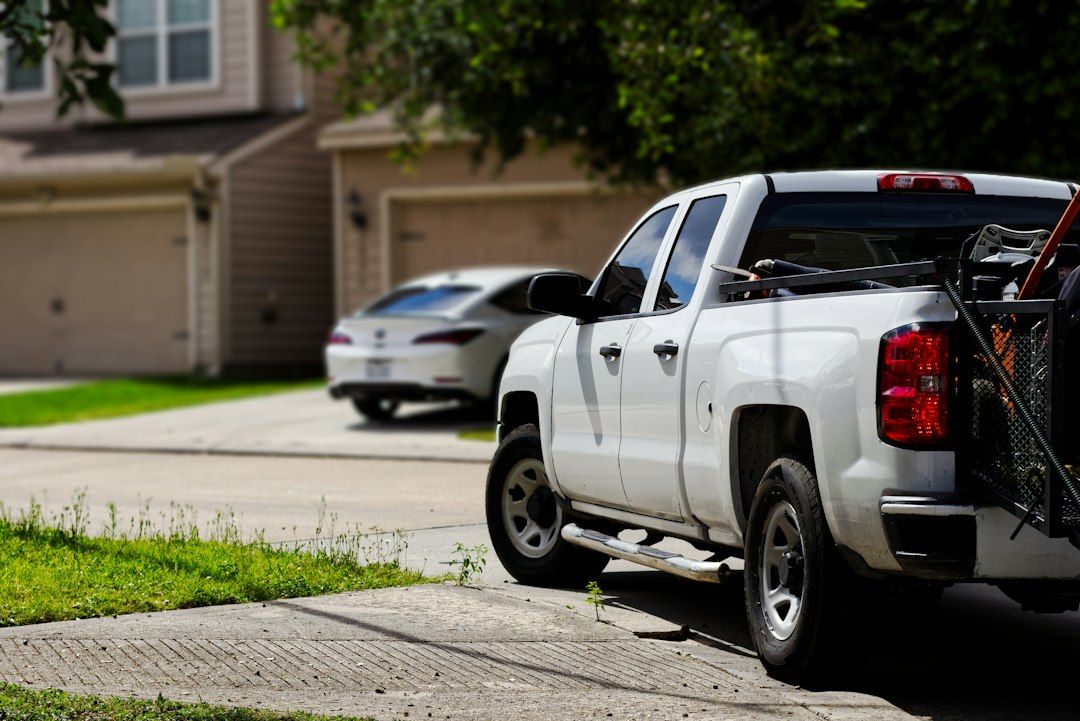
Is Bundling Your Car and Renters Insurance in Texas Really Worth It?
If you rent an apartment, condo, or single-family home in Texas, you have likely been asked by an insurance representative or an online checkout form if you want to bundle your policies. The simple answer is yes: for the vast majority of Texas tenants, pairing your auto policy with tenant coverage delivers instant savings and closes dangerous liability gaps. In fact, because renters coverage is one of the most affordable policies on the market, the multi-policy discount applied to your vehicle premium often offsets most or even all of the renters premium.
However, bundling is not a magic wand that works equally well in every scenario. As a fourth-generation insurance professional who has worked with Texas families and business owners for more than thirty years, I have seen plenty of situations where blindly forcing two policies together actually cost the driver money. Understanding when a package deal saves cash and when keeping your policies separate makes financial sense is the key to protecting your wallet and your property.
How a Car and Renters Insurance Bundle Works in Texas
To see why bundling is so popular, you have to look at the baseline numbers in our state. Texas is a notoriously tough insurance market. We face severe hailstorms in North Texas, hurricane activity along the Gulf Coast, flash floods in Central Texas, and dense urban traffic in major hubs like Houston, Dallas-Fort Worth, and Austin. Because of congested highways, high vehicle repair costs, and frequent weather claims, auto insurance in Texas regularly runs anywhere from $1,600 to well over $2,600 per year for full coverage, depending on your driving record and zip code.
Renters insurance, by comparison, carries very little catastrophic structural exposure for the tenant because the landlord's commercial property policy covers the physical building. According to data published by the Texas Department of Insurance, the average renters policy in Texas costs around $20 per month, which works out to roughly $240 per year. For that modest price, you receive personal property protection, personal liability coverage, and guest medical payments.
When an insurance company issues a multi-policy discount, it typically applies a percentage savings to both lines of business, though the dollar impact on the vehicle policy is where the real magic happens. Most carriers provide a 5% to 15% discount on the auto premium when you add a property line, along with a 5% to 10% discount on the renters premium.
Consider how the math plays out in everyday life:
- Standalone full-coverage auto policy: $2,200 per year ($183 per month).
- Standalone renters insurance policy: $240 per year ($20 per month).
- Combined unbundled cost: $2,440 per year.
- A 10% multi-policy discount applied to the auto policy: $220 in annual savings.
- A 10% multi-policy discount applied to the renters policy: $24 in annual savings.
- Total annual bundle discount: $244. Notice what just happened. The $244 in bundle discounts completely canceled out the $240 cost of the renters policy. By setting up a car and renters insurance bundle, this driver effectively picked up tenant protection for free, while trimming $4 off their net annual insurance expense.
That mathematical reality is why insurance carriers market these packages so aggressively. But saving money on paper is only half the equation. You also need to understand how the coverages interact when life in Texas takes an unexpected turn.
Where Car Insurance and Renters Insurance Intersect
One of the most common misunderstandings we see among renters involves property theft from a vehicle. Every year, tenants across Texas park their cars outside their apartment complexes or downtown parking garages, only to wake up to broken windows and missing personal belongings, like laptops, tools, gym bags, or golf clubs.
When people call their insurance company to report the break-in, they are often stunned to learn that their auto policy does not cover their personal possessions. Auto comprehensive coverage pays only for damage to the vehicle itself, such as the shattered side glass, broken ignition, or dented door frame. The items inside the vehicle are legally categorized as personal property, which falls strictly under your Texas renters insurance guide coverage.
When you secure your car and renters insurance through two completely unrelated insurance companies, handling an auto burglary requires filing two separate claims with two separate adjusters. You must pay an auto comprehensive deductible to repair your car, and then pay an entirely separate personal property deductible to replace your stolen laptop.
When you maintain an auto and renters insurance bundle with a single carrier or agency, the claims experience changes significantly:
- Streamlined claim coordination: You work with one customer service team and adjusters who can review the incident report simultaneously, reducing paperwork and back-and-forth phone calls.
- Single deductible benefits: Many forward-thinking carriers offer a single deductible endorsement. If a single incident damages both your vehicle and your personal property, such as an apartment carport collapse during a North Texas storm or a smash-and-grab theft, the insurer may waive the smaller deductible or require you to pay only one deductible instead of two.
- Synchronized liability limits: If an accident occurs where someone threatens legal action against you, having both policies managed together makes it simpler to ensure your personal liability on the rental side complements the bodily injury liability on your auto policy. To explore how these policy mechanisms function under Texas statutes, our comprehensive Texas renters and auto insurance bundles coverage and savings guide offers deeper insight into coordinating coverages across carriers.
Real Texas Case Studies: When Bundling Wins and When It Fails
Insurance is never one-size-fits-all. What saves money for an established professional renting a townhouse in Katy may be entirely wrong for a college student in San Marcos or a driver with past moving violations in El Paso. Here are three realistic scenarios illustrating how bundling plays out across our state.
Case 1: The Young Professional in Uptown Dallas
A twenty-seven-year-old marketing manager leases a one-bedroom apartment in Uptown Dallas and drives a late-model compact SUV. Her landlord requires proof of at least $100,000 in personal liability coverage before handing over the keys.
She already carried a standalone auto policy with a major statewide carrier, paying $185 a month. Rather than purchasing a random $15 third-party renters policy offered through her apartment management portal, she requested a quote to add renters coverage to her existing auto insurer.
Because of her good credit and clean driving history, adding renters coverage at $30,000 in personal property and $300,000 in personal liability cost $190 per year. In return, the carrier applied an 11% multi-policy discount to her auto insurance, saving her $244 annually on her vehicle premium. Her net insurance spending dropped by $54 per year, while giving her triple the liability coverage her landlord originally requested.
Case 2: The University Student Needing Cheap Insurance for Young Drivers
A twenty-year-old student living off-campus near Texas State University in San Marcos drives an older sedan. Young drivers under twenty-five consistently face some of the highest auto insurance rates in Texas due to statistical accident frequencies. Finding cheap insurance for young drivers is notoriously difficult on a student budget, and auto rates can easily exceed $250 a month for state-minimum liability.
The student had to purchase renters coverage because his student housing complex mandated a active tenant policy. Instead of treating these as two isolated chores, he worked with an independent agent to quote a car insurance and renters insurance bundle.
The insurer offered a 12% multi-policy credit on the car insurance, reducing the student's steep auto bill by nearly $30 per month. The renters insurance policy cost just $16 per month. By bundling, the student saved roughly $14 net every month while fulfilling his lease requirements and ensuring that his electronics, textbooks, and wardrobe were fully insured against apartment water leaks and fire risks. If you are navigating high rates for younger operators, our Texas young driver and teen car insurance guide outlines additional discount strategies that work hand-in-hand with multi-policy discounts.
Case 3: The Driver with Past Tickets in San Antonio
A thirty-four-year-old tenant in San Antonio had two speeding citations and a minor at-fault fender bender on his motor vehicle record over the past thirty months. Standard tier carriers were quoting him very high auto rates, running upwards of $3,200 annually.
A standard preferred carrier offered him an auto and renters insurance bundle with an appealing 15% discount. However, even with the 15% discount, the auto portion of that package remained elevated at $2,720 per year due to the carrier's strict underwriting surcharges for tickets.
When an independent agent shopped the market, they placed his vehicle with a non-standard auto specialist who offered competitive baseline pricing for drivers with imperfect driving records, costing $1,850 per year. That specialty auto carrier did not write renters policies. The agent then placed his renters insurance as a standalone policy with a different company for $210 per year.
His total unbundled annual cost was $2,060, compared to $2,930 under the preferred carrier bundle. In this instance, bundling would have cost him an extra $870 a year. Chasing a bundle discount without looking at the starting baseline rate is one of the costliest errors a consumer can make.
When Separate Policies Beat an Auto and Renters Insurance Bundle
Bundling is common, but it is not universally optimal. There are clear, defined situations where keeping your policies with separate insurance carriers is the smarter move for your budget and your protection.
High-Risk Driving Records or Surcharges
As illustrated in our San Antonio case study, preferred bundle carriers reward clean records and stable loss histories. If you have an active SR-22 filing, a recent DUI conviction, multiple moving violations, or an at-fault accident, mainstream carriers will charge punitive premiums. Specialty non-standard auto carriers, which exist specifically to write coverage for high-risk drivers, rarely offer property insurance. In these circumstances, you are almost always better off buying standalone auto coverage through a competitive non-standard company and purchasing an independent renters policy elsewhere. You can learn more about managing these trade-offs in our guide on cheap car insurance in Texas smart savings strategies.
Specialty Vehicles and Custom Uses
If you drive a classic automobile, an exotic sports car, or use your vehicle for commercial delivery or ridesharing, a standard passenger auto policy may not provide adequate protection. Companies that specialize in classic car agreed-value policies or commercial auto lines often do not issue personal renters insurance. Forcing your coverage into a standard consumer bundle could leave you with coverage exclusions or inadequate payouts if a custom vehicle is damaged.
The Baseline Premium Trap
Never let an impressive discount percentage blind you to the bottom-line cost. An insurance company offering a 20% bundle discount on a $3,000 policy is still charging you $2,400. A competing company charging $1,900 with no bundle discount beats the bundled offer by $500. Independent data from consumer advocates and organizations like the National Association of Insurance Commissioners consistently reminds policyholders that the absolute net dollar cost across all policies is the only metric that matters, not the discount percentage printed on the proposal.
Complex Landlord Mandates
Certain large corporate property management groups require very specific language on renters policies. They may require that the leasing office be listed as an additional interested party, demand immediate electronic notifications of cancellations, or mandate specific water backup coverage endorsements. If your auto insurance company offers only a bare-bones renters policy without customizable endorsements, you might fail to satisfy your lease requirements. In those scenarios, placing your renters coverage with a property-focused carrier that accommodates specific lease verbiage is well worth losing a minor multi-policy credit.
Key Policy Features Every Texas Renter Should Review
When shopping for a car and renters insurance bundle, it is tempting to focus solely on the vehicle collision limits and deductibles, treating the renters policy as an afterthought. That is a costly mistake. If a burst pipe or kitchen fire destroys your apartment, the structure of your renters policy determines whether you recover smoothly or suffer permanent financial damage.
Make sure your package includes these crucial provisions:
- Replacement Cost Coverage (RCV) vs. Actual Cash Value (ACV): Standard bare-bones policies pay actual cash value, which depreciates your property based on age and wear. If your five-year-old laptop is stolen, an ACV policy might pay you $150, leaving you out of pocket for a modern replacement. Always request Replacement Cost Value, which pays to replace your belongings with brand new items of like kind and quality.
- Personal Liability Limits: Never settle for the bare minimum of $50,000 or $100,000 if you can avoid it. Increasing your personal liability from $100,000 to $300,000 or $500,000 typically costs less than $20 to $30 per year. This protection defends you if someone slips inside your apartment or if you accidentally cause water damage that affects neighboring units below you.
- Loss of Use / Additional Living Expenses (ALE): If an apartment fire or severe storm renders your rental uninhabitable, your landlord is not responsible for paying for your hotel, short-term rental, or restaurant meals while repairs take place. Loss of Use coverage pays these extra expenses so you do not drain your savings.
- Water Backup Endorsement: Most basic renters policies exclude damage caused by sewer or drain backups. In older apartment complexes across Texas cities, sewer lines and plumbing backups can overflow into ground-floor units. Adding a water backup rider is an inexpensive way to guard against catastrophic ruined furniture. Balancing these coverages alongside your vehicle limits creates a solid safety net. If you want to understand how liability coverage connects between your driving and living arrangements, review our breakdown of Texas insurance basics protecting home, auto, and life.
How to Shop and Compare Your Options Like a Pro
To determine whether bundling makes sense for your household, follow this systematic approach before signing any renewal or application:
- Complete a quick personal inventory: Walk through your apartment with your smartphone camera, opening closets and drawers. Estimate the realistic cost to replace your clothes, furniture, kitchen appliances, and electronics. This prevents underinsuring your belongings.
- Review your current lease: Verify the exact liability amount your landlord mandates and whether they require an interested party notification clause.
- Request separate quotes alongside bundled quotes: When consulting an agent, ask for the best bundled option, but also ask for the lowest standalone auto price paired with the lowest standalone renters price.
- Compare bottom-line annual totals: Add the auto premium and the renters premium together for both options. Choose the configuration that provides the highest coverage quality at the lowest net annual expense.
- Partner with an independent insurance agency: A captive agent representing only one national insurance company can only sell you that single company's bundle, whether it is competitively priced for your profile or not. An independent agency works with multiple carriers, giving them the flexibility to bundle your policies when it saves you money or place them with separate specialist carriers when that yields a better outcome.
Making the Right Choice for Your Texas Budget
Deciding whether to bundle your auto and renters insurance comes down to evaluating the net numbers and verifying that neither policy cuts corners on critical protection. For roughly eight out of ten Texas renters with clean or reasonably clean driving records, combining auto and renters insurance with a single carrier provides undeniable financial advantages. The multi-policy discount applied to the auto policy routinely pays for the renters coverage, giving you personal property protection, vehicle burglary coverage, and essential personal liability coverage for negligible out-of-pocket costs.
At the same time, bundling is not an absolute rule. If you carry points on your driving record, drive a non-standard vehicle, or find that a carrier's vehicle baseline rate is inflated, keeping your auto and renters policies separate can save you hundreds of dollars annually. The smartest strategy is never to guess. Have a seasoned professional review your situation, run the side-by-side numbers across multiple carriers, and help you lock in the protection that fits your life.
BIG - Brock Insurance Group
Ready to protect what matters to you without overpaying? Call BIG - Brock Insurance Group today or request a quote online, and let our Texas-based independent team shop multiple top carriers to build a tailored plan for your home, auto, life, business, or farm and ranch coverage. With over 30 years of Texas market experience, we take the mystery out of multi-policy discounts, comparing bundled and standalone options to ensure you get the absolute best protection at the lowest possible rate. Go BIG, Save BIG!
Need coverage advice? Let’s talk.
Get a fast, no-pressure quote and guidance tailored to your needs.