
When Checkout Goes Down: Cyber Insurance for Texas Restaurants and Retailers
A practical guide to POS outages, payment-data incidents, vendor dependencies, and cyber insurance questions for Texas restaurant and retail owners.
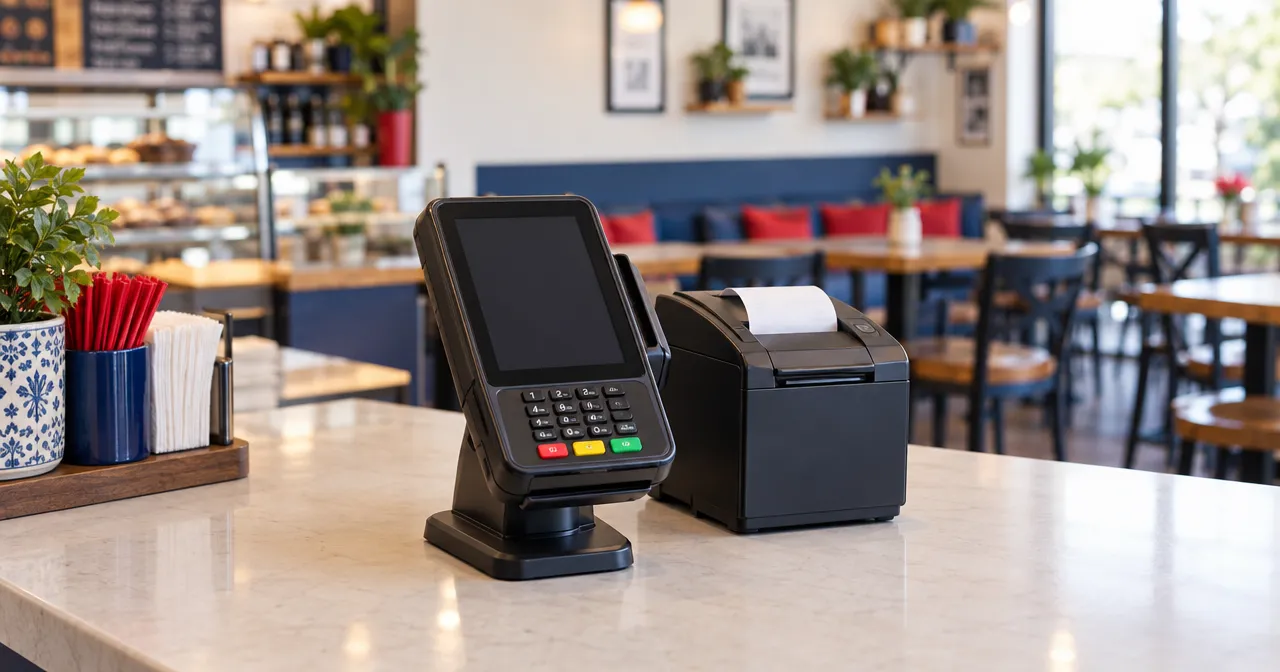
At 6:15 on a Friday evening, a Friendswood restaurant's checkout screen freezes. The kitchen can still cook, but servers cannot close tabs, send orders from handheld devices, or reconcile tips. Across town, a small retailer gets a message that its payment processor is investigating suspicious activity. Neither owner can tell yet whether this is a local device problem, a vendor outage, or a cyberattack.
Those possibilities create different losses—and different insurance questions. Cyber insurance for restaurants and retailers is not simply “coverage for a hacked register.” It may help with a covered security event, investigation, recovery, certain lost income, and claims involving exposed information. But a nonmalicious software failure, a compromised payment vendor, or a fraudulent transfer can be treated differently. This guide helps Texas owners map the payment workflow, plan for an interruption, and compare policy language before a busy shift becomes a claims test. Examples are hypothetical; actual coverage depends on the policy and facts.
First, map what checkout depends on
A point-of-sale (POS) setup is often more than the card terminal. Orders may pass through handhelds or registers to a cloud platform; payment authorization may use a processor; online orders may arrive through a separate marketplace; inventory and payroll may depend on exports from the same system. A restaurant also needs kitchen tickets, refunds, gift-card balances, tip records, and end-of-day totals. A retailer may need barcodes, returns, pickup orders, and inventory counts.
Draw one page with four columns: system, provider, business function, and fallback. Include the internet connection, in-store network, Wi-Fi for payment devices, local hardware, POS software, payment processor, online storefront, accounting integration, and any outside IT support. Note where payment information or customer contact details are stored. For each provider, write down the support number, your account identifier, who can open a support ticket, and whether the contract addresses outages and security incidents.
This is not a request to become your own security engineer. It is a way to answer a basic question: What breaks first if this service is unavailable? The FTC's small-business cybersecurity guidance specifically includes POS devices and third-party services in a business's inventory and recommends a response plan that addresses continuity and recovery.
Three incidents that look similar from the counter
1. The local system is locked or infected. A manager opens a fake vendor message and signs in on a lookalike page. An attacker gains access to an account that manages registers or files. Sales may stop, data may be inaccessible, and someone must determine whether information was taken. A cyber policy may have separate terms for forensics, data restoration, cyber business interruption, and privacy liability. The fact that staff can still take cash does not answer whether a covered interruption occurred or how the loss is measured.
2. The outside platform goes down. Your restaurant's own devices are clean, but the hosted POS or payment provider is unavailable. Ask whether your policy covers an interruption caused by a dependent or contingent system, which providers qualify, and whether a cyber event at that provider is required. A generic cloud outage or ordinary technical failure may be outside a policy that responds only to a defined security incident. The vendor's service credits, if any, are not the same thing as insurance for lost income.
3. Transactions run, but payment data may be exposed. The risk is no longer just a slow checkout. The owner may need technical investigation, coordination with the processor or acquiring bank, legal advice about notices, and a way to answer customers accurately. A third-party claim, payment-card assessment, or investigation cost is not necessarily covered merely because a cyber policy mentions “data breach.” Ask about each category, its sublimit, and any exclusions or required vendors.
The PCI Security Standards Council's merchant resources explain that payment-data security involves people, processes, and technology. PCI DSS applies to entities involved in payment processing regardless of merchant size, while validation and reporting obligations should be confirmed with the merchant's acquirer or payment brand. An outsourced card processor can reduce some work; it does not automatically remove every merchant responsibility.
Build a fallback you can actually use during a shift
A contingency plan should be short enough for a shift lead to follow while customers are waiting. Decide who checks the provider's status channel, who calls support, who informs staff, and who authorizes a temporary change in payment or order-taking. Keep a printed or separately accessible copy of the plan and contacts; a file stored only inside the affected POS is not a fallback.
For a New Braunfels café, a rehearsal might cover how to record orders if kitchen printers stop, which menu items can be fulfilled without the online-order queue, and how to reconcile tips after service returns. For a Houston-area boutique, it might cover how to distinguish paid online pickups from in-store sales and avoid duplicate charges when systems sync again. Establish where paper transaction records will be stored, who enters them later, and how you will document sales missed or refunded.
Do not improvise card handling. Do not photograph cards, write down security codes, or enter payment details into an unapproved spreadsheet because the terminal is unavailable. Ask your processor in advance which backup payment methods, if any, it permits and how to use them securely. If mobile or offline processing is available, confirm its transaction limits, reconnection procedure, and fraud responsibility with the provider rather than assuming it works the same way as ordinary checkout. Staff should know when to pause card acceptance and use an approved alternative—or simply stop taking that payment type until it is safe to resume.
Track the outage in ordinary business terms: when the system became unavailable, which locations and functions were affected, what sales records you can still access, refunds or spoiled orders, extra staffing or equipment expense, and when each service was restored. This log helps the owner manage the day and gives an insurer a clearer basis for evaluating a claim. It does not mean every recorded cost is covered.
Separate the policies by the loss they are meant to address
The FTC's cyber insurance overview distinguishes first-party costs, such as forensic work, notification, data recovery, and some interruption losses, from third-party claims made against the business. That framework is a starting point; the wording, triggers, waiting periods, limits, and exclusions in a particular policy control.
Use a real checkout scenario when reviewing these coverage areas:
- Cyber incident response and data recovery. Who answers the breach hotline? Is the restaurant required to use an approved forensic firm or obtain consent before retaining one? Does the form cover restoring transaction records, or only specified data and systems?
- Cyber business interruption. Does lost income require a security failure of your computer system? Can an attack at a named provider qualify? How long is the waiting period, and what extra expense is included? Ask how sales are documented when a business operates partially on cash or a backup platform.
- Privacy and payment-card exposures. Are defense costs and notification expenses addressed? Are payment-card assessments, contractual liabilities, or related forensic requirements specifically included, limited, or excluded? Avoid treating a headline limit as the amount available for every type of loss.
- Commercial property and business owners policy (BOP). A burst pipe that damages registers or a fire that closes the location is a different event from ransomware or a cloud-service outage. Ask how physical damage and traditional business income coverage respond, rather than assuming a property policy covers an electronic incident or that cyber covers a broken machine.
- Crime and professional liability. If a fake payment-provider email convinces an employee to send a wire or change a bank account, ask whether cyber or commercial crime has social-engineering or funds-transfer-fraud terms. If your business supplies services or technology to others, a professional liability/errors and omissions claim may raise another set of issues. Neither policy should be treated as interchangeable with cyber.
For a multi-location retailer, also ask whether the limit is shared across all locations and whether one provider incident affecting several stores counts as one occurrence. For a restaurant with substantial online delivery revenue, ask whether platform downtime counts the same way as an in-store POS outage. These are underwriting and wording questions, not universal coverage promises. BIG – Brock Insurance Group can help compare cyber coverage with the business's existing property, BOP, general liability, crime, and professional liability arrangements where relevant.
Outsourcing payments still leaves questions for the owner
When a processor, POS vendor, web storefront, and IT provider all touch the workflow, identify which one manages each security task. Who updates terminal software? Who controls administrator logins and remote access? Who preserves transaction logs? Who notifies you of an incident, and how quickly? What information will the provider give your insurer or investigator if the service fails?
The PCI Security Standards Council's November 2026 guidance on third-party service providers stresses documenting responsibilities and monitoring relevant providers, rather than assuming that outsourcing transfers all obligations. Your acquirer and providers can clarify the requirements for your particular payment environment. From an insurance perspective, tell your agent which platform is essential to sales so you can ask about dependent-system coverage using the correct vendor names and functions.
Vendor management can be simple: keep the agreement, a current support contact, the name of your internal administrator, and a note of which tasks the provider handles. Revisit that list when you change processors, add a delivery platform, move to a new cloud POS, or open a second location. Confirm that multifactor authentication is enforced on administrator and remote-support accounts and that useful records can be restored after a failure. A receipt printer and a hosted dashboard have very different recovery paths.
If checkout trouble may be a security incident
A processor outage announcement alone does not prove customer information was stolen. Conversely, a register that starts working again does not prove no information was accessed. Have the shift lead record what happened and when, then contact the designated owner, the POS or processor support line, and the IT provider. Use known contact details, not a telephone number supplied in a suspicious message. If there is a suspected compromise, ask the technical team how to isolate affected access while preserving logs and devices for investigation; do not wipe equipment or announce a breach before facts are established.
Promptly check the policy's incident-reporting instructions and any required consent to use response vendors. If personal information may have been exposed, seek legal advice about notice obligations and involve the processor or acquiring bank where card data is implicated. The FTC's data-breach response guide recommends securing operations, preserving evidence, bringing in appropriate experts, and determining which parties must be notified.
Texas has its own reporting rules. The Texas Attorney General's data-breach reporting page says a reportable breach affecting 250 or more Texans must be reported to that office as soon as practicable and no later than 30 days after discovery; affected-consumer notice is also required under applicable law. Whether an event is a reportable breach, which information was affected, and what other obligations apply are legal questions. Do not use that 250-person threshold as a reason to ignore a smaller incident or delay asking counsel.
A 30-minute review before your next rush
- Trace one sale. Follow a card transaction from terminal to processor and into the records you use for reconciliation. Write down every provider and the person who can contact it.
- Test the fallback on paper. If checkout is unavailable for two hours, how are orders taken, payments handled through an approved method, refunds recorded, and tips reconciled? Who decides when the fallback ends?
- Check the accounts that can disrupt sales. Review administrator and remote-support access, enforce MFA where available, remove former employees' access, and ask the vendor how restores and incident logs work. Do not guess when answering an insurer's security questionnaire.
- Bring two scenarios to your agent. One: your location's POS is compromised. Two: your hosted provider suffers a covered attack while your local hardware remains intact. Ask what differs in trigger, waiting period, provider eligibility, response costs, and limit. Add a third scenario if you handle substantial online sales or stored customer information.
- Keep evidence without oversharing. Save vendor contracts, insurer hotline information, recent sales records, and a short outage log in a secure location accessible if the POS fails. Keep actual payment-card details out of an improvised incident folder.
A Texas restaurant or shop does not need a large IT department to start this review. It needs a clear map of how sales happen, a safe way to pause or continue service, and insurance questions tied to plausible losses. For help comparing suitable cyber and small-business coverage through an independent carrier network, call BIG – Brock Insurance Group at (281) 482-4244 or request a quote. The team can walk through your operations, coverage options, and value with you.